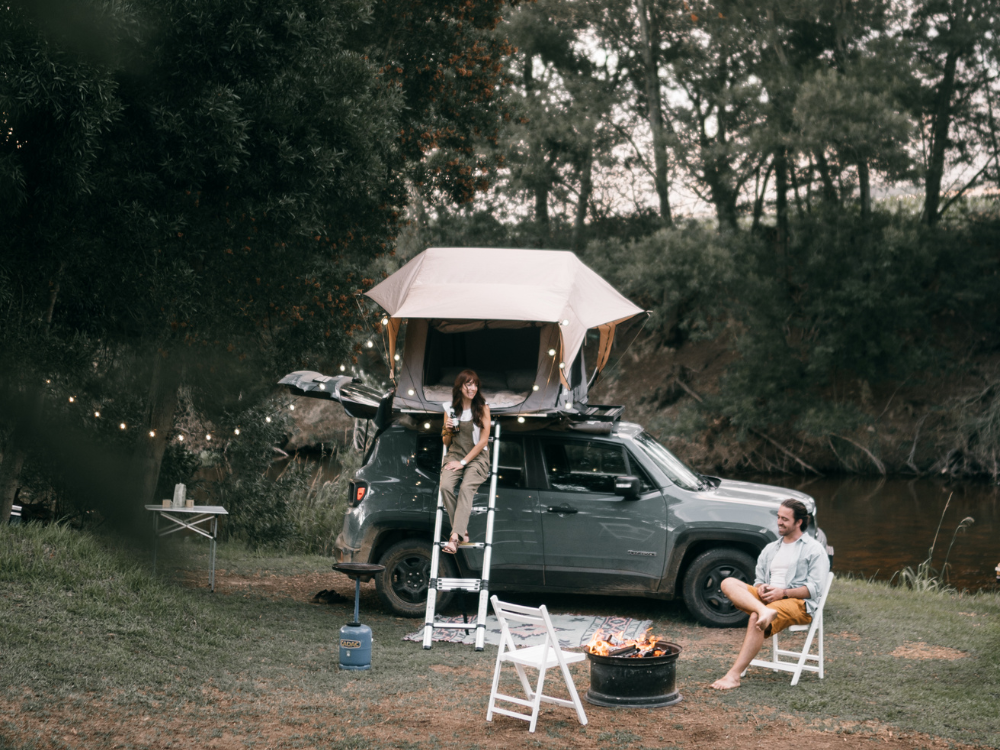
Alright, you’ve got the gear sorted, whether that’s a budget van fit-out or a few worthwhile upgrades to the set-up, you’re ready to go. Now it’s time to level up. The right tent and the right fridge only get you so far, what actually separates a good trip from a great one is knowing what to do when the wind picks up, the fire won’t start, or you’ve got no signal and no idea which track leads back to the highway. These are the camping skills that turn a beginner into someone who actually knows what they’re doing out there.
If you’re not staying at a park where your site’s already allocated, the prettiest spot isn’t always the smartest one. Look for flat, well-drained ground first, a site that floods or pools water the second it rains isn’t a campsite, it’s a bathtub. Check what’s overhead too, steer clear of dead branches or standing dead trees that could come down. Low points in the landscape collect cold air overnight, so a slightly higher spot usually means a warmer sleep. And if you’re still getting used to your setup, pitch it once at home in daylight before you’re doing it for the first time in the dark.
It’s easy to check the weather where you’re headed and call it done. The bit people skip is everywhere in between. Check wind conditions and rain forecasts along your actual route, not just the campsite, conditions can be completely different an hour up the road. If you’re near water, check tide times before you set up, not after the esky’s floating. And check what time sunset is expected so you’re not caught driving an unfamiliar road in the dark with no plan.
Phone reception drops out exactly when you need it most, especially when going rural or remote. Before you head off-grid, download offline maps, not just for the destination, for the whole route. Carry a paper map as backup, know how to read basic topographic markers (water, elevation, track type), and always tell someone your route and expected return time. It costs nothing but it’s an essential safety step.
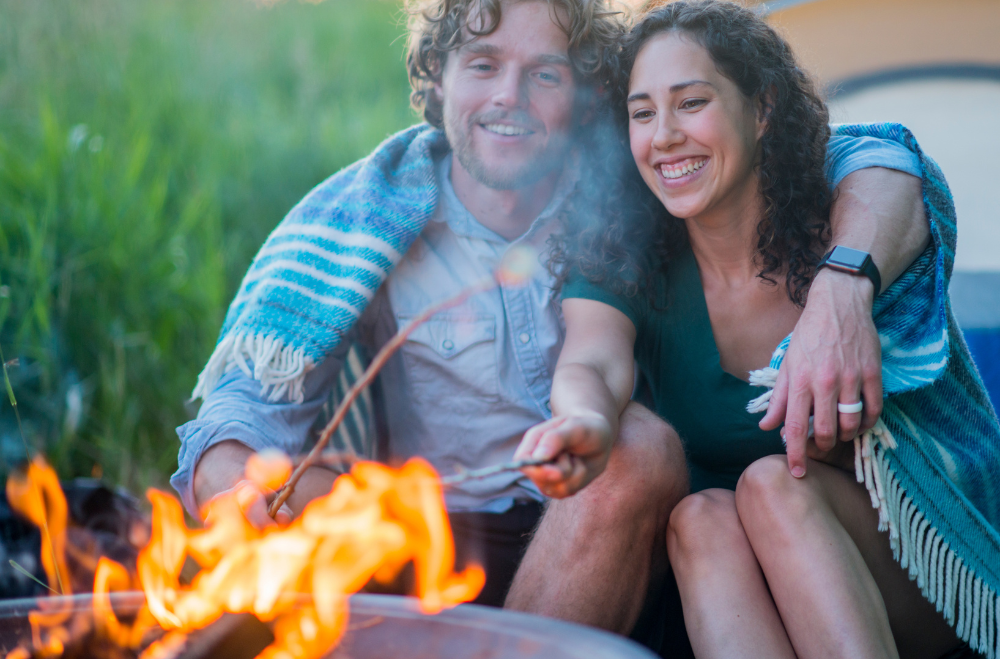
Most people are surprised how hard it actually is to get a fire going properly, wet wood, not enough kindling, one gust of wind and you’re starting over.
Check your state’s fire authority on the day, total fire bans override everything. Clear the area down to bare dirt, at least a metre clear of anything overhanging, and never set up under low branches or close to your tent or van. Gather all your kindling and wood before you light anything, then build up, not out, a loose teepee shape gives the fire room to breathe instead of smothering it under a dense pile.
If the wood’s damp, sit your next pieces near the flames rather than on them, they’ll dry out ready to use. A gentle breeze helps, but anything stronger needs a windbreak, or use your van, or the fire scatters embers instead of catching. And if you’re genuinely stuck, ask whoever’s got a fire going nearby for a few hot coals, old bush etiquette, and it beats re-lighting from scratch.
Keep water or dirt within reach, never leave it unattended, and when you’re done, stir it, soak it, and check it’s cool before you walk away. For the full rundown, we’ve got a dedicated campfire safety guide worth bookmarking too.
A first aid kit sitting in the bottom of the boot doesn’t help if you don’t actually know how to use what’s in it. We’ve covered why a first aid kit matters, but the short version, cuts, burns, blisters and sprains are the most common things you’ll deal with camping, so know the basics for each before you need them. It’s worth doing a proper first aid course at some point, even a one-day one. It’s cheap, it’s not a huge time investment, and it’s the difference between handling something calmly and hoping someone else knows what to do.
Keep in mind that first aid kits go out of date, contents and all. That kit that’s been living in the van for a decade might have degraded dressings and expired creams or medication in it. Give it a proper check before your next trip, not just a glance at the box.
Pack out every bit of rubbish, no exceptions and no matter how small. One of camping’s most important unspoken rules is Leave No Trace. If you’re washing up, do it well away from any creek or waterhole, soap and food scraps don’t belong in the water supply. Keep food and anything scented sealed away from your sleeping area and closed up, an esky left open overnight is basically an invitation for wildlife to come check out camp.
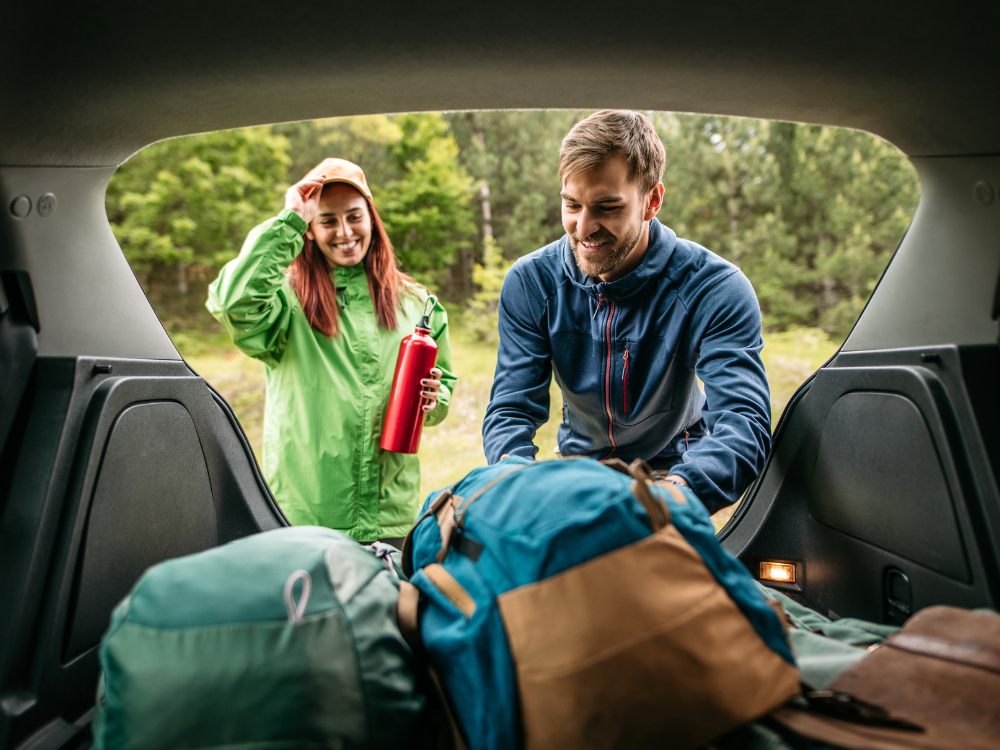
Before you disappear from range, run through the basics: full tank, spare tyre actually checked (not just present), enough water for longer than you think you’ll need, and a physical first aid kit you know how to use. Let someone know where you’re headed. None of this is exciting. All of it is the difference between a story you tell later and one that ends with a tow truck.
None of this needs a shopping trip. It just needs five minutes before you leave, and the sense to actually use it when it matters. Gear gets you out there, skills are what make you good at it. Happy camping!
Recent Post:


Categories:
Tags:
Key Industry Partners