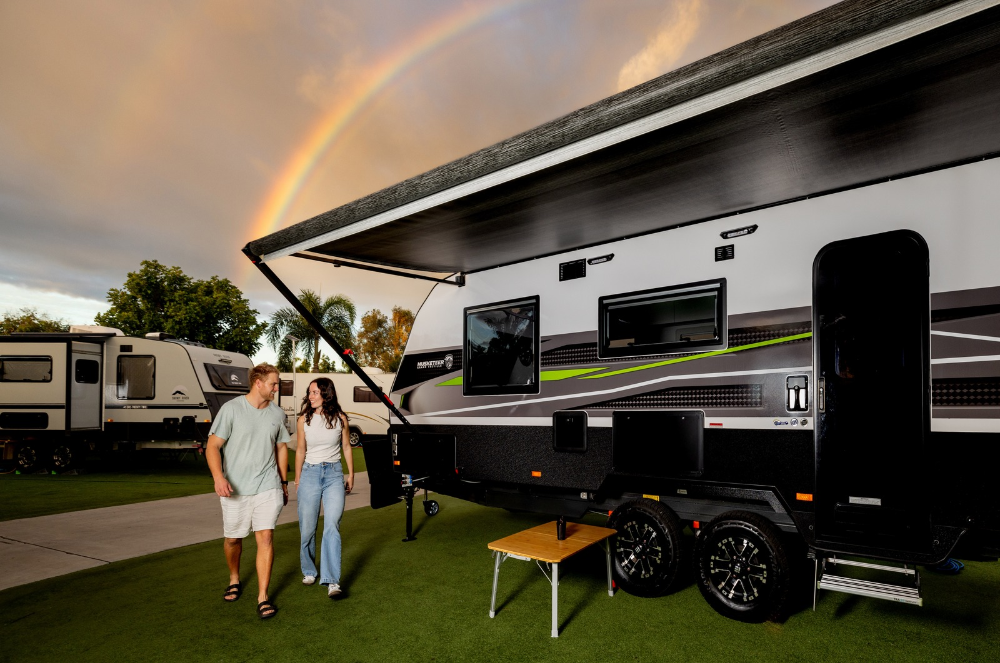
From reversing under pressure to preparing for long outback drives, Grace and Matt share what life on the road has taught them so far.
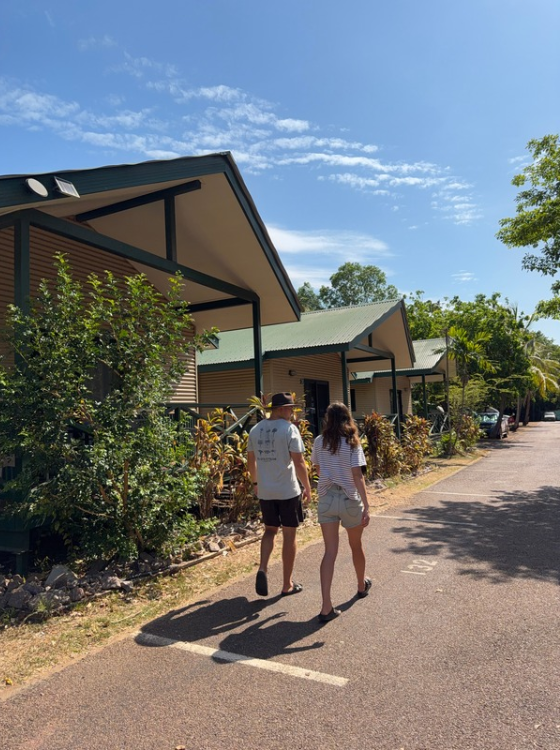
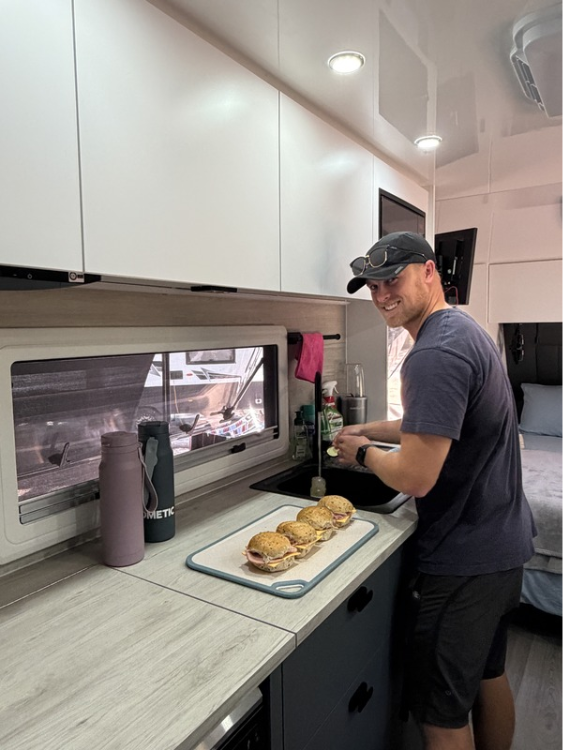
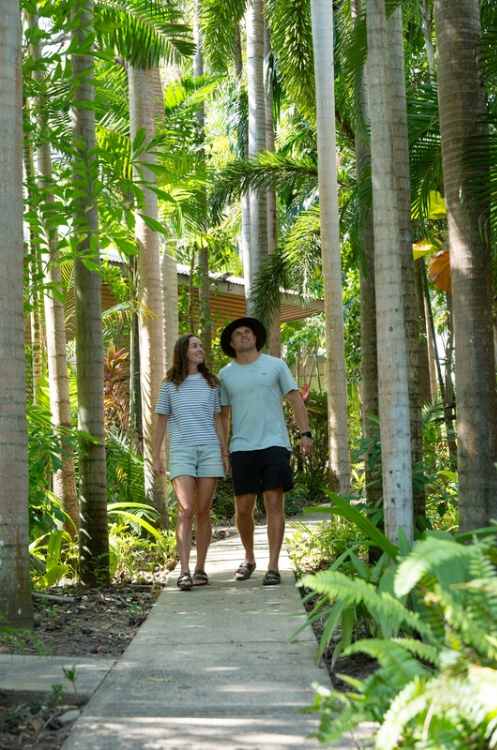
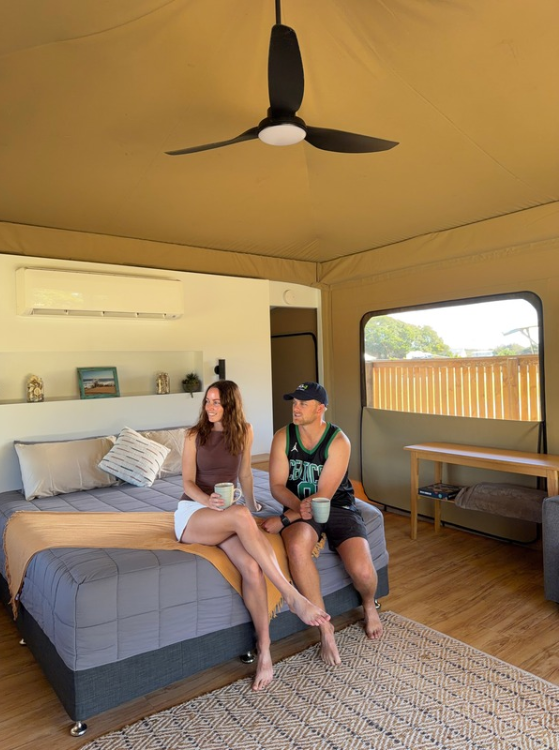
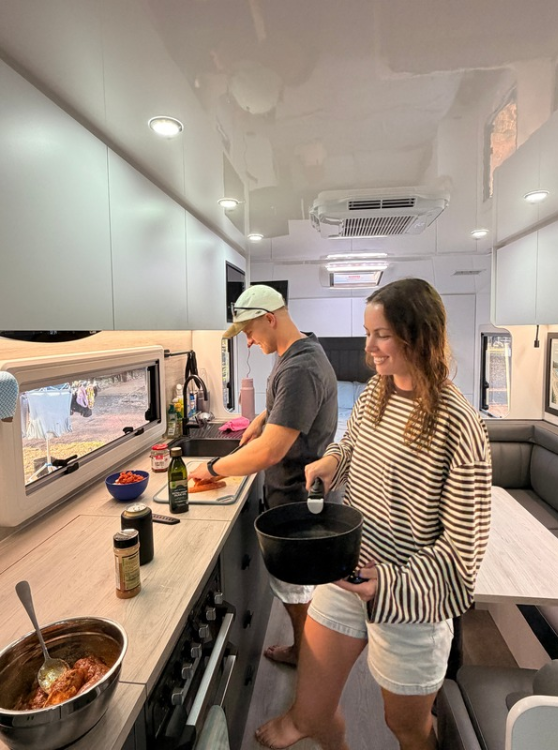
Hi, we’re Grace and Matt, two former tent campers now travelling around Australia with a caravan as part of The BIG Aussie Review.
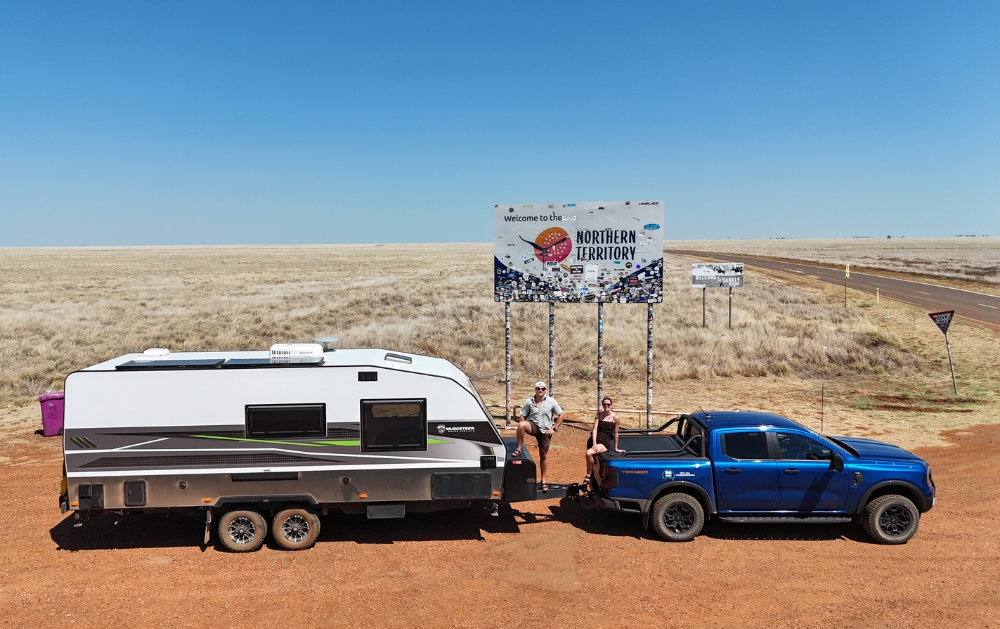
We were chosen from hundreds of applicants to spend 365 days travelling and reviewing Australia in a Ford Ranger and Crusader caravan, staying at BIG4 parks along the way. When we set off from the Gold Coast, we had plenty to learn! Neither of us had much towing experience, and reversing a caravan was completely new territory.
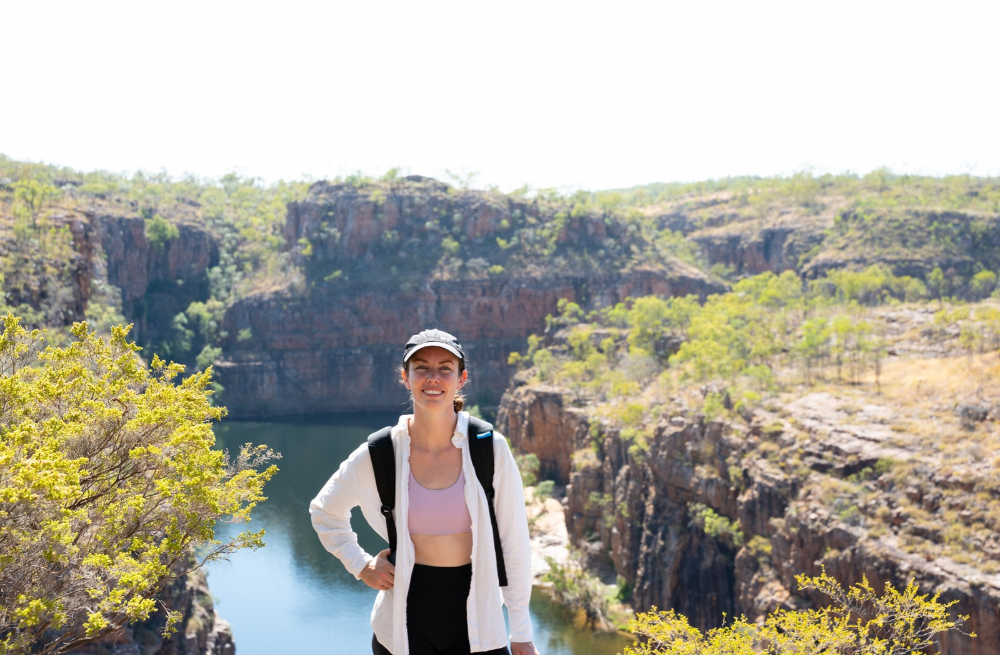
Since then, we’ve travelled through Southern and Northern Queensland, tackled long stretches of outback road and crossed into the Northern Territory and Western Australia. Along the way, we’ve learned a few things the hard way, met some incredible people and collected more than a few stories we’d rather laugh about now than relive at the time.
We’ve discovered that caravanning is less about having everything worked out before you leave and more about getting comfortable figuring things out as you go. Here are our biggest lessons so far.
Reversing into a site was one of our biggest challenges, and people always seemed to appear just as we began (no pressure!). Our biggest improvement came when we stopped worrying about the spectators and concentrated on communication.
Using radios or staying on a phone call lets the person outside the vehicle give clear directions without shouting across the park. We also agree on simple instructions beforehand, rather than inventing a system halfway through the reverse. We haven’t perfected it, but we’re calmer and far more coordinated than when we left home.
Our lesson: Work out a simple system, communicate clearly and take your time. The people watching will find something else to look at soon enough.
Every caravanner has their own way of doing things. People have shown us different approaches to towing, braking, awning setup and adjusting the van, from flipping the tow ball to using anti-flappers on the awning.
Not every suggestion suits every setup, but listening has helped us understand our own equipment. We take in the advice, ask questions and work out what makes sense for our vehicle, caravan and travel style. There usually isn’t one perfect answer; your routine develops slowly.
Our lesson: Be open to advice, but make sure it is appropriate for your equipment. Over time, the useful bits and pieces will become your own routine.
Not long into the trip, our jockey wheel housing decided it wanted some attention. While packing up at BIG4 Mackay Blacks Beach Holiday Park, it started slipping, and we we’re sure how to fix it.
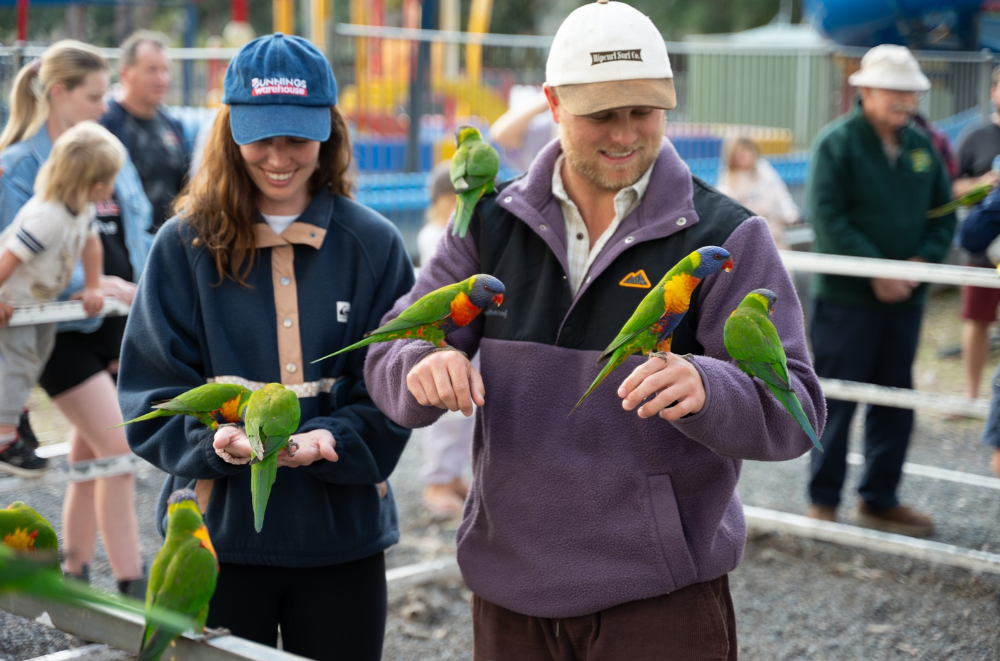
As it turns out, magic in a caravan park looks a lot like helpful neighbours! One person brought over blocks, another dug out a handy tool, and someone else sent us in the direction of the nearest automotive store.
Caravan parks are full of people who’ve seen it all before and are more than happy to help. Pretending you know what you’re doing rarely solves the problem. Asking one question often does.
Our lesson: Don’t let embarrassment stop you from asking for help. Most experienced caravanners remember being beginners and are happy to share what they know.
One evening in Elliott, Northern Territory, we thought we had blown a fuse in the caravan. Imagine this: two of us spending an hour and a half in the dark unplugging wires, checking outside and looking under the bed, imagining the worst. Yes, we even phoned a friend who is an electrician…
Eventually we realised it was the power button on the display. The power cord hadn’t been connected properly, so we had drained the battery and the system had reset!
It was a humbling reminder to start with the obvious before assuming the worst.
Our lesson: Check the connection, switch and power supply first. The problem may be much simpler than the dramatic scenario you’ve built in your head!
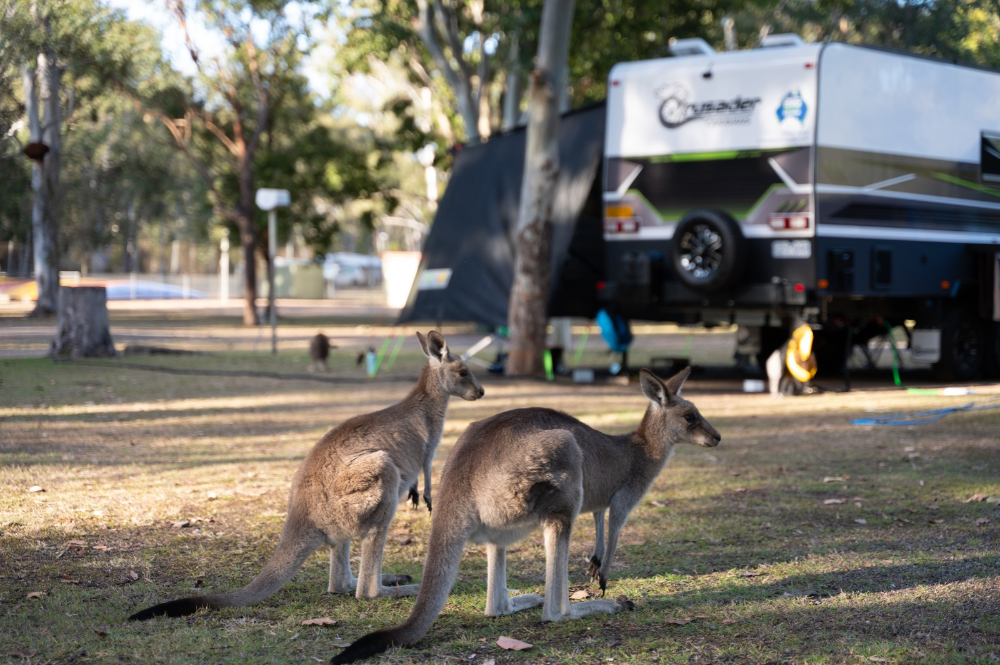
Before we left, we packed for almost every situation imaginable. Clothing was the clearest example: we brought plenty of options but kept rotating through the same few comfortable outfits. As it turns out, storage space is far too valuable to waste on clothes you might wear once.
In more remote areas, other items quickly became non-negotiable. Travelling through the outback taught us to carry more drinking water than we thought we’d ever need. A UHF radio became a lifesaver when phone service disappeared, and jerry cans gave us peace of mind between fuel stops. A good podcast helps too, although after eight hours behind the wheel, it can still feel like you’ve barely moved on the map in northern Australia!
Our lesson: Pack fewer things for the unlikely “just in case” scenarios and more of the basics that support the conditions ahead. Your needs will change as the landscape becomes more remote, so leave room for what you’ll actually use.
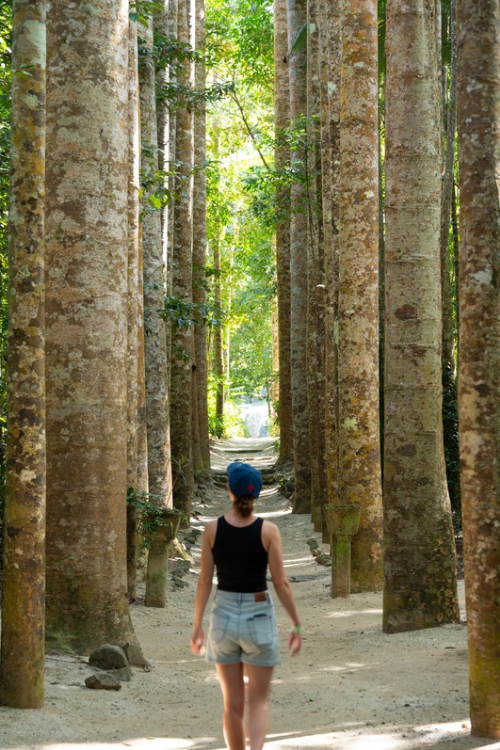
When we visited Purnululu National Park, we left the caravan behind and took our camping gear into the park. The scenery was incredible. Our packing efforts were slightly less impressive.
We forgot the hose attachment for the shower, which meant our dream of a refreshing rinse turned into pouring bottles of water over each other instead. It worked… technically. A side trip needs a different checklist, because it’s surprisingly easy to assume something is packed when it’s actually sitting several hours away in the caravan.
Our lesson: Create a separate checklist for overnight side trips. Water, cooking equipment, lighting and the correct connections are all worth checking twice. Future you will be very grateful!
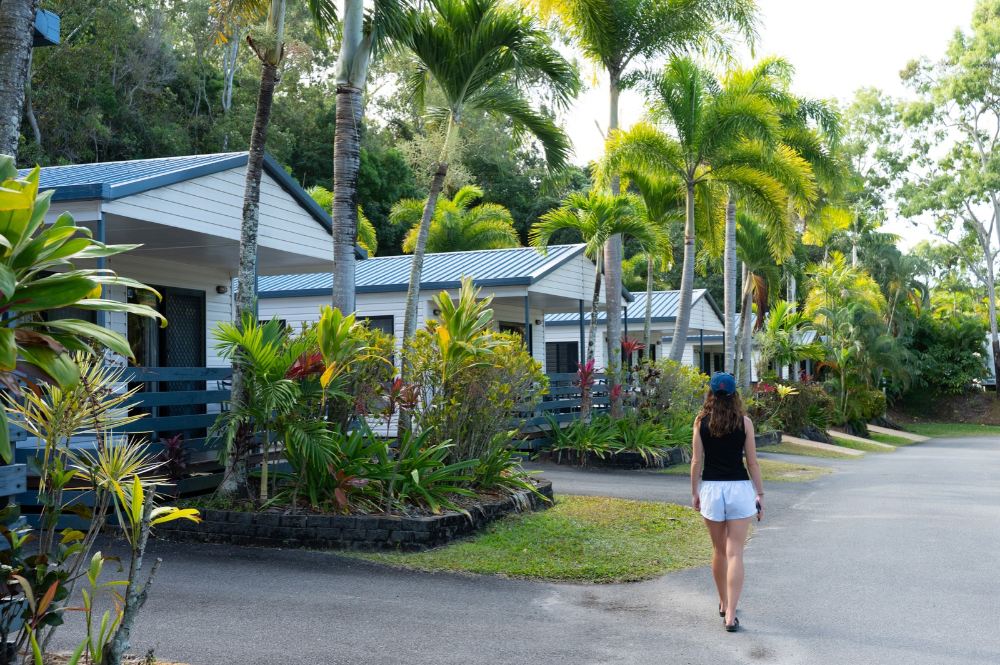
Nothing fully prepared us for how big Australia would feel once we reached the outback. Distances that looked manageable on a map quickly turned into enormous driving days, phone reception disappeared and towns were separated by long stretches of road that seemed to go on forever.
We learned to plan fuel stops carefully, carry extra water and download entertainment and travel information in advance. The isolation takes more preparation, but the changing landscapes, huge skies and sense of space are part of what makes it so memorable!
Our lesson: Look beyond the distance shown on the map. Consider fuel, water, road conditions, phone coverage and how much daylight you’ll have before choosing your next stop. In the outback, a little extra planning goes a long way.
We started this trip thinking we needed to learn how to become caravanners before we could feel confident on the road. What we’ve realised is that the learning happens during the trip: when a reverse doesn’t go to plan, when another traveller lends a hand or when you spend far too long investigating a power problem that turns out to be a button!
We still make mistakes, but we no longer expect to have every answer immediately. We slow down, check the basics, ask for help and try again.
That might be the biggest lesson of our BIG Lap so far: you don’t have to be an expert to start, but you do need to be willing to learn along the way. And if things don’t go to plan, chances are you’ll end up with a good story to tell.
If you want to follow along with Grace & Matt’s adventures, you can find them on Instagram or keep up at the BIG4 website.

Recent Post:
Categories:
Tags:
Key Industry Partners