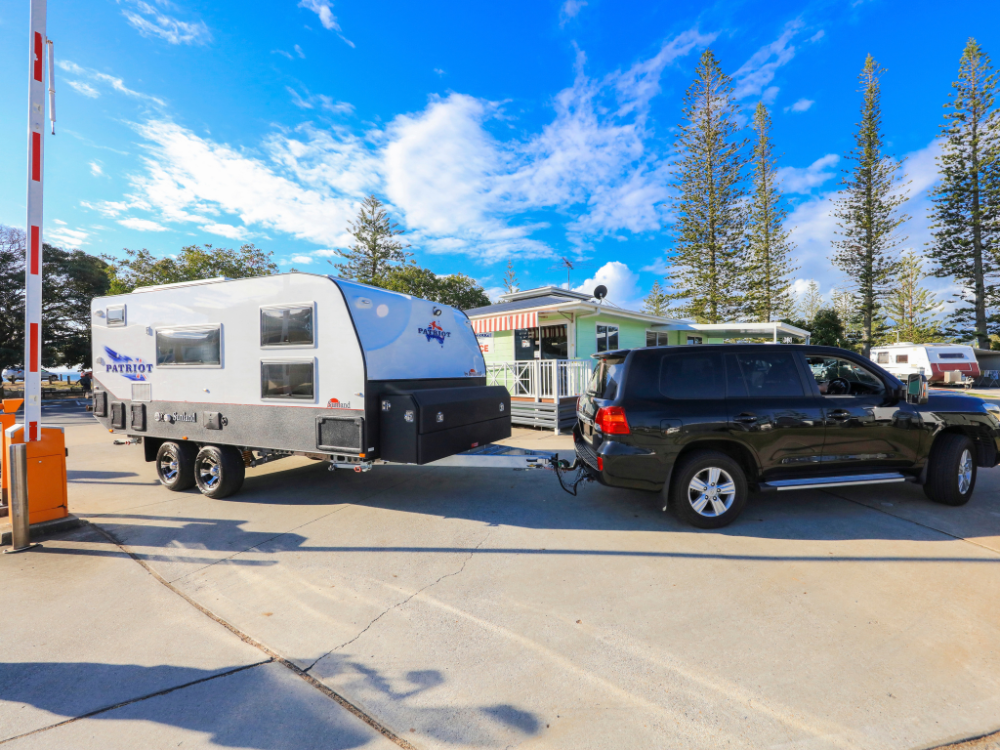
Reversing a caravan is a skill anyone can learn, and most of it comes down to planning, slow movements and clear communication. It can feel nerve-racking at first, especially with neighbours watching, but many parks ask guests to back onto their site so the van lines up with the power and water connections. Here is how to get comfortable with it before your next trip.
If you’re just getting started with Towing, check out our Towing Guide for more.
When you reverse with your hands at the top of the steering wheel, the caravan moves the opposite way to the wheel. The easiest fix is to move your hands to the bottom of the wheel. From there, move your hands in the direction you want the back of the caravan to go, and the van will follow. Motoring clubs and towing educators commonly recommend this technique.
Your caravan pivots around its wheels, so where those wheels sit when you start steering decides when the van begins to swing. Small steering movements create big movements at the back of the van, so keep adjustments gentle. Longer vans respond more slowly than short ones, which gives you more time to correct and often makes them easier to reverse.
Practise somewhere quiet. Your first attempt should not be in a crowded park. Set out a few cones in an empty car park and practise straight reverses and gentle turns.
Set up your mirrors and camera. Towing mirrors are essential, and often a legal requirement. Australian vehicle standards require your mirrors to give a clear view along both sides of your vehicle and caravan, so if your van is wider than your tow vehicle and your standard mirrors leave blind spots, you need extended towing mirrors. Adjust them with the car and van straight so you can see down both sides of the caravan. A reversing camera helps you check what is directly behind the van, but distance on a screen can be hard to judge, so use it alongside your mirrors.
Clear the space between car and van. Remove bikes or other gear carried on the front of the van or the back of the vehicle, as they reduce how far the van can turn.
Inspect the site. Walk the site first and look for bollards, taps, trees, low branches and uneven ground. Note where the power and water connections are, and allow room for your awning or annexe.
Plan your approach. Where possible, reverse so the van swings in on the driver’s side. In Australia that means having the site on your right, where your view is best. Wind the windows down and turn the music off so you can hear your spotter.

A good spotter watches the caravan’s path as you reverse, looks out for obstacles and tells you what to do next. If you can, choose the most experienced person in your group, as reading where the van will go matters more than who is driving.
Your spotter should never stand behind a moving caravan. They need to be where you can see them at all times, such as in front of the vehicle or clearly in your side mirror. If you lose sight of them, stop.
Agree on simple signals before you start. Here is one set that works well with the hand-at-the-bottom method:
| Spotter signal | What it means for the driver |
|---|---|
| Points an arm left or right | Move the back of the van that way (push your hands at the bottom of the wheel in that direction) |
| Pats both hands on their thighs | Return the wheels to straight |
| Points both thumbs to one side | Turn the wheel that way until the wheels are straight, then a thumbs up |
| Holds up a hand, palm out | Stop |
| Points an arm towards the back of the vehicle | Reverse slowly |
| Waves both hands towards themselves | Drive forward |
Handheld UHF radios or phones on speaker also work if your spotter is further away. If a signal is unclear, stop and check.
These steps assume the site is on your driver’s side and you are starting at a right angle to it. Make steering changes while stopped: stop, adjust, check, then move a little.
Every car and caravan combination turns differently, so treat the paces as a starting point. If the van cuts the corner, start your turn a little later next time. If it ends up in the middle of the site, start a little earlier.
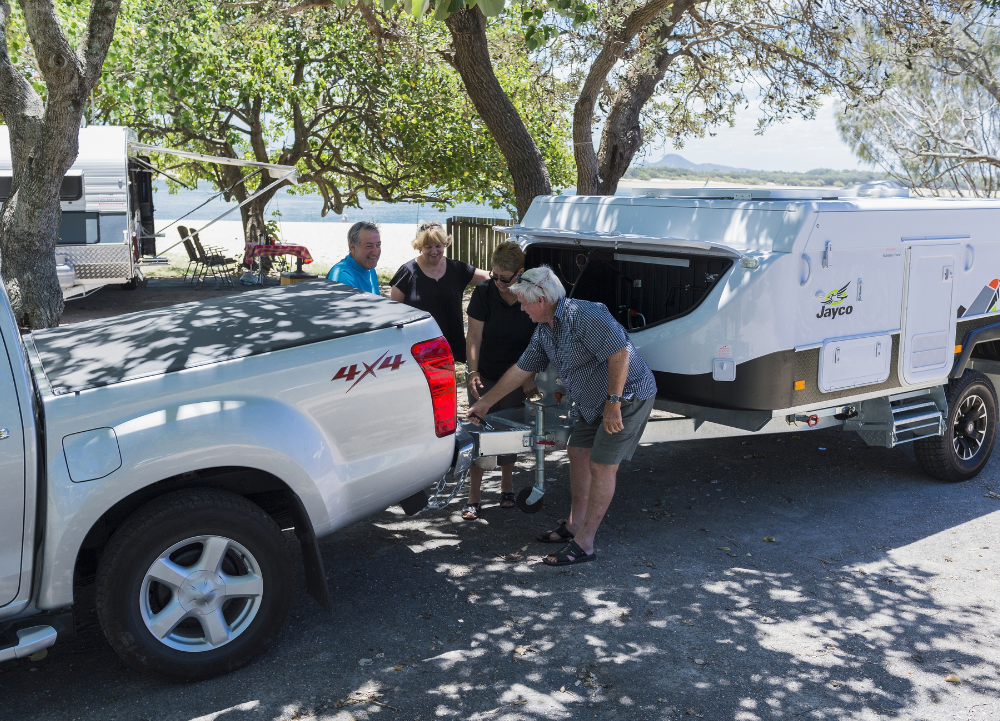
A jackknife happens when the angle between the car and caravan gets so tight that the van hits the back of the tow vehicle. To avoid it, look down the side of your vehicle, from the front or in your wing mirror, and pick a feature on the front of the van that comes into view before the two get too close. When it appears, stop and unwind. Keeping your speed down makes a jackknife far less likely.
Without a spotter, the technique for reversing your caravan is the same but you need to check more often. Use cones or buckets to mark your turn-in point and finishing spot. Scan from mirror to mirror, and if the van drifts out of view on one side, gently move your hands at the bottom of the wheel towards that side. Stop and get out to look as often as you need to.
To judge how far back to go, have your spotter pace from the back of the van to the finishing point, then pace the same distance from the driver’s door towards the van and stand there. Reverse until your window is level with them. On your own, mark that spot with a cone instead.
With a tandem-axle van, turning into a site can twist the suspension and coupling, making the van hard to unhitch. Drive forward a short way and reverse straight back to release it.
Before unhitching, check you have room for your awning and access to power and water. Apply the caravan’s handbrake and chock the wheels if needed. If your caravan has electric brakes and they engage when you reverse, check your brake controller settings first. If the problem continues, have the controller and wiring checked by a qualified technician.
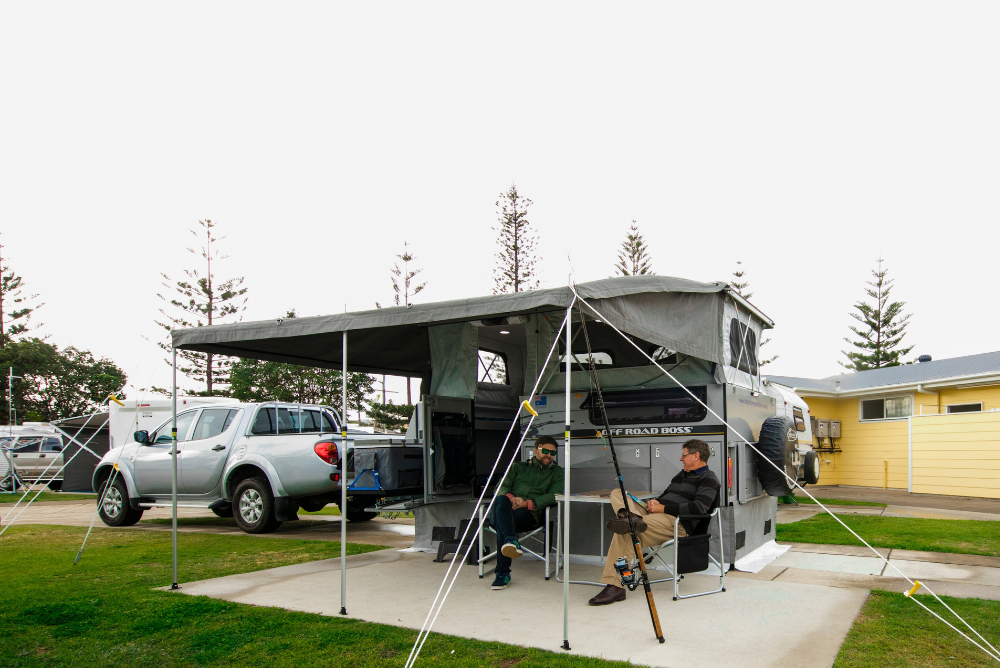
Every car and caravan combination behaves differently, so the more time you spend getting to know yours, the more natural reversing becomes. If you want hands-on coaching, some motoring clubs and driver training providers run caravan courses that cover reversing.
For more towing tips, check out our Towing Guide.
Recent Post:


Categories:
Tags:
Key Industry Partners